


 The Kaipher Editorial Team
Scientists have, for the first time, precisely dated the emergence of microbial life within an ancient meteorite impact crater, revealing that life took hold in the 78-million-year-old Lappajärvi crater in Finland just 4.4 million years after the asteroid struck. Published on September 17 in Nature Communications, the research demonstrates that impact craters can serve as long-lived refuges for microbial ecosystems, with implications for life’s persistence on Earth and potentially other planetary bodies (Phys.org).
Hydrothermal Habitats in the Lappajärvi Crater
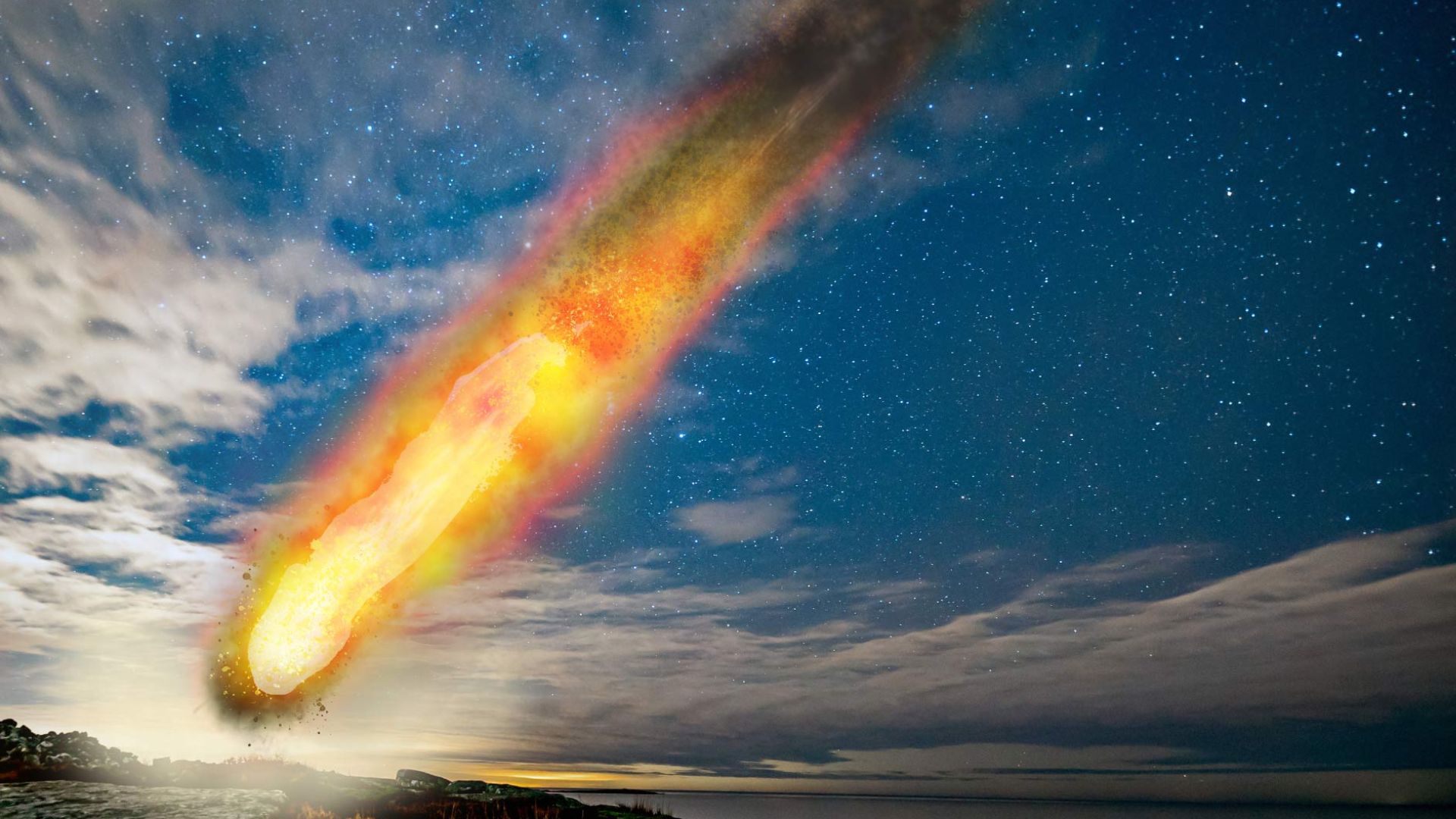
Formed when a 1.6-kilometer asteroid collided with western Finland, the Lappajärvi impact created a 23-kilometer wide basin punctuated by pervasive fracturing of the bedrock. These fractures channeled heated groundwater, establishing a hydrothermal system that could persist for millions of years post-impact.
Using radioisotopic dating combined with isotopic biosignature analysis of mineral deposits, researchers from Linnaeus University traced evidence of microbial sulfate reduction—a metabolic process requiring living bacteria—to vein calcites and sulfates within the crater floor. The isotopic ratios of sulfur and carbon in these minerals unequivocally point to biologically mediated reactions occurring at about 47 °C, conditions optimal for thermophilic communities.
Lead author PhD student Jacob Gustafsson and senior author Professor Henrik Drake determined that the earliest microbial activity dated to 73.6 million years ago, only 4.4 million years after the impact event. “This is the first time we can directly link microbial activity to a meteorite impact using geochronological methods,” said Drake, emphasizing that the timeline pinpoints when life colonized the fractured hydrothermal habitats, rather than at some undetermined later period (Linnaeus University).
Long-Term Persistence and Metabolic Diversity
Beyond the initial colonization, geochemical signatures indicate that microbial ecosystems persisted for at least 10 million years post-impact. The team detected isotopic evidence for both methane production and consumption, suggesting a diverse microbial community capable of multiple metabolic pathways. These findings mirror observations from Europe’s largest impact structure—the 50-kilometer-wide Siljan crater in Sweden—where fossils of microbial activity persisted up to 300 million years after impact. However, the Lappajärvi study is the first to precisely date such colonization relative to the impact event, firmly establishing a causal link between crater formation and habitable niche creation.
The Lappajärvi results extend our understanding of how impact-induced hydrothermal systems can foster and sustain life. As impact craters provide continuous heat and fluid circulation, they create stable microenvironments in otherwise inhospitable crustal settings, promoting colonization by thermophiles capable of exploiting chemical disequilibria.
Implications for Astrobiology
Co-author Dr. Gordon Osinski of Western University in Canada highlighted the broader astrobiological significance: “This research connects the dots. It confirms that meteorite impacts generate long-lived habitable environments, potentially on Mars, Europa, and other bodies throughout the solar system.” Medium-sized craters measuring 20–30 kilometers in diameter are an order of magnitude more common than larger basins, suggesting that impact-generated ecosystems may have been widespread on the early Earth, contributing to the origin and early evolution of life.
On Mars, detections of methane emissions and past evidence of hydrothermal alteration in cratered terrains raise the possibility that extinct or dormant microbial niches exist—or once existed—in similar settings. The precise geochronological approach demonstrated at Lappajärvi offers a template for future investigations of Martian craters, where rovers and sample-return missions could target mineral deposits for isotopic biosignature analysis.
A Framework for Future Impact Studies
The methodology—combining high-resolution radioisotopic dating with detailed isotopic mapping of biosignature minerals—establishes a robust framework for assessing microbial colonization timelines in other terrestrial impact structures and, eventually, extraterrestrial samples. Field teams plan to apply these techniques to additional craters on Earth, refining our understanding of how quickly and for how long life can exploit impact-induced hydrothermal systems.
As Henrik Drake noted, “Impact craters are favorable microbial habitats on Earth and perhaps beyond.” By dating the colonization of Lappajärvi to a narrow window after impact, this study cements the role of craters as cradles for life, shaping the ongoing search for life’s ancient and potential modern footholds across the solar system.



Your article helped me a lot, is there any more related content? Thanks!